
Recapping the Future of Talent Workshop
If you had to describe your Early Talent program in one word, what would it be?
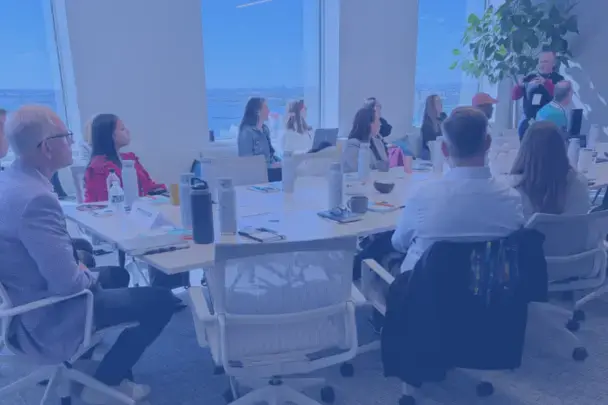
That was one of the questions Kelly Couto, VP of Enterprise Solutions at Atrium, posed to Early Talent leaders earlier this month at the Future of Talent Workshop hosted by TALiNT Partners at our Atrium New York City headquarters in tandem with HireVue.
The event brought together corporate leaders from across industries for panel discussions and peer roundtables exploring executive alignment and return on spend, the science of selection, AI-powered assessments, and internal mobility. Throughout the workshop, participants exchanged perspectives on the challenges facing Early Talent teams and opportunities to strengthen their programs.
When asked to describe their programs in one word, responses included “experiential,” “intentional,” and “change,” which reflects the different stages and priorities shaping Early Talent programs today. While every organization is at a different stage, many are navigating similar challenges as expectations grow around candidate experience, emerging technology, skill development, and long-term value.
At Atrium, we see many of these shifts firsthand. Over the past year, our Early Talent programs attracted 59,546 applicants and filled 2,558 positions across 66 locations.
From building stronger connections with emerging talent to rethinking candidate assessments, here are four themes that stood out from the event.
1. Think Beyond the Internship
An internship may last a few months, but its influence can extend far beyond the program itself. More than 70% of employers extend full-time offers to interns, and 80% of students accept them. Those hires also tend to stay, with more than 75% remaining after one year and over half still with their employer after five. That’s why the experience matters. Meaningful work, strong manager support, and thoughtful onboarding can help interns build confidence and see a future with your business.
The same idea shapes how Atrium recognizes each Early Talent class. For every intern placed through our programs, we plant a tree in their honor. The Class of 2026 added 2,558 trees, bringing our Atrium total to more than 8,000 since 2022.
Much like planting a tree, growth doesn’t happen all at once. It takes consistent investment and support long before the full results are realized.
Creating an experience that supports that kind of growth starts well before an intern’s first day and continues after the program ends. Our Complete Step-by-Step Guide to Building a Successful Early Talent Program offers a roadmap for every stage, with best practices for creating engaging experiences and building a stronger pipeline for future hiring needs.
2. Rethink How You Identify Potential
AI is already influencing how young candidates prepare for and engage in the hiring process, as well as how they work once they’re hired.
More than 60% of students use generative AI for resumes and almost 50% use it for interview preparation. As these tools become more common, employers may need to look differently at how they evaluate candidates. A polished resume or interview only tells part of the story. Skills, behaviors, and potential matter too.
That becomes especially important when Early Talent programs attract thousands of applicants. Assessments can add structure and consistency to the process while helping teams manage volume. In fact, 35% of employers now use assessments to help manage increasing applicant volume. And how these assessments are used matters just as much. They can give candidates a clearer understanding of the role and encourage self-selection while helping employers recognize strengths that might not come through on a resume.
Our Best Practices for Using Assessments in Early Talent Hiring explores ways to make screening more effective while creating a better experience for applicants.
3. Start Building Skills Earlier
Many employers already have a sense of the capabilities they’ll need in the next three to five years. Early Talent programs create an opportunity to start preparing for those needs now rather than waiting until demand becomes urgent.
That means thinking beyond a summer class. A year-round, “four seasons” approach can help you stay connected with former interns, engage promising candidates, and create a more consistent path from early career experience to future employment.
Doing that effectively requires more than recruitment alone. We’ve seen this firsthand with a global biopharma leader that partnered with Atrium to strengthen its Early Talent recruitment. Our team managed the full placement lifecycle for interns and co-ops, creating a more efficient approach to recruitment, onboarding, and employment while supporting the client’s broader hiring goals.
4. Show the Value Beyond Headcount
Applications, offers, and hires are important measures of success, but they don’t tell the whole story. As companies invest more in Early Talent, there’s growing interest in understanding what happens after the internship ends. Retention, conversion, time-to-productivity, and internal fill rates can provide a more complete picture of how these programs contribute to long-term talent needs.
The numbers make a strong case as 92% of intern managers say they would convert their intern to a full-time hire, while employees hired through internships stay more than 50% longer than those hired through other channels. Looking at these outcomes helps teams identify where their approach is working, where improvements may be needed, and how to demonstrate the value of Early Talent investments to executive leadership.
What’s Next for Early Talent
The conversations at our Future of Talent Workshop made it clear that there isn’t one word that defines where Early Talent is headed. Technology is influencing how candidates are evaluated, expectations are growing, and employers are looking more closely at how these programs contribute to long-term organizational success. Through it all, the opportunity remains the same. Give emerging talent room to grow while creating a stronger foundation for the next generation of employees.
So, as you reflect on your own program, consider the question that started the conversation:
What one word describes your Early Talent program today, and what would you like that word to be a year from now?