




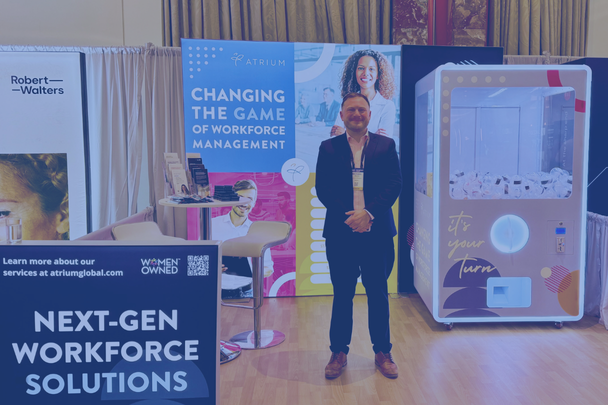

Walking away from this year’s CWS Summit, one theme stood out above everything else. The contingent workforce is a strategic priority, not an operational tool. And yet, despite the scale and importance of this workforce, most companies are still managing it in ways that were designed for a much simpler, smaller environment. The conversation has moved from efficiency to impact, but execution hasn’t caught up just yet.
The Scale Is Massive, But So Is the Gap
The numbers alone are remarkable. Over $10.2 trillion in global contingent workforce spend, with contingent talent making up nearly 30% of the average workforce mix, illustrating that this worker category is no longer niche. It is a core component of how companies operate. Yet many organizations are trying to manage this complexity with fragmented, siloed, and inconsistent systems.
Manage the Work, Not the Suppliers
An ongoing theme throughout the event was that most programs are still designed around supplier management rather than actual work delivery. Historically, success meant controlling vendors, negotiating rates, and ensuring compliance. But that lens is increasingly outdated. The more important focus should be on outcome-based models, particularly SOW, which is forcing a reconsideration of how work is defined, measured, and delivered.
Most Programs Are Still Immature
Despite the importance of contingent labor, most workforce programs are still relatively immature. A large percentage function with limited visibility, inconsistent governance, and only partially defined processes, while very few reach a level of true enterprise-wide optimization. This maturity gap is where much of the opportunity lies. Companies are sitting on considerable potential to improve cost, quality, and risk management, but accessing that value requires a change in how these programs are structured and led. To benchmark your program and find opportunities for improvement, take our MSP Maturity Quiz here.
AI Is Accelerating Both Opportunity and Risk
AI and automation are quickly changing how contingent work is sourced, managed, and delivered. From intelligent sourcing tools to digital talent platforms, technology is expanding access to talent and increasing efficiency across the lifecycle. At the same time, it is adding new layers of complexity, especially around compliance, governance, and identity verification. Regulations like the EU AI Act and the rise of digital identity risks are forcing organizations to think more critically about how they manage risk in a digital-first workforce environment.
Legacy Thinking Has Become the Biggest Constraint
One of the more candid insights from the summit was that many long-standing “best practices” are now acting as constraints. Approaches like heavy supplier consolidation, excessively rigid control frameworks, and treating contingent labor purely as a procurement function can slow programs down in an environment that demands speed and flexibility. What once created efficiency is, in many cases, now limiting adaptability, as workforce models become more global, specialized, and project-driven.
Leaders Are Designing Ecosystems, Not Programs
The organizations that are pulling ahead are approaching workforce strategy differently. They are breaking down silos between HR and procurement, committing resources to data and visibility, and focusing on adoption (not just implementation) of technology and processes. Rather than managing programs in isolation, they are building connected workforce ecosystems that directly support business goals.
An Inflection Point
The overarching takeaway from the Summit is that we are at an inflection point. The scale, tools, and models are already in place to transform contingent workforce programs into true strategic differentiators but realizing that potential requires more than incremental change. It requires leaders to fundamentally rethink how work gets done, rather than simply modernizing legacy approaches.
Atrium helps bridge this gap by partnering with organizations to design and operationalize workforce strategies that deliver real, outcome-driven impact. If you’re looking to evolve your contingent workforce into a true strategic advantage, scalable, efficient, and aligned to business goals, we’d welcome the opportunity to connect. And for more workforce insights, download our 2026 Market Trends ebook here.